
Accelerate Drug Development
Access over 200 validated CDX models across solid and hematologic malignancies, with options for orthotopic, systemic, and dual-tumor designs. These models support rapid transitions from in vitro screens to in vivo efficacy, PK/PD profiling, biomarker analysis, and resistance studies. Advanced imaging, customizable implantation formats, and humanized compatible models enable tailored study designs for preclinical decision-making.
With our platform, you get:
-
Large-scale model library with short turnaround and robust historical data
-
High reproducibility for comparative or combination drug efficacy studies
-
Seamless transition from in vitro screening to in vivo validation
Explore multiple in vivo assay systems to evaluate novel anticancer compounds, with each assay specifically designed to understand a drug's mechanism of action or an individual agent property.
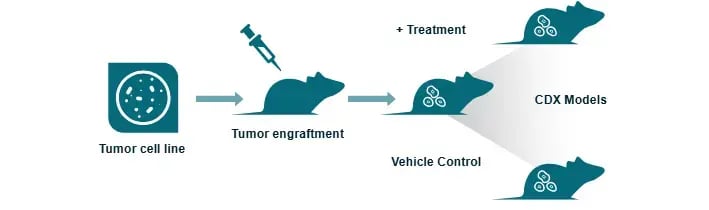
Cell Line-Derived Xenograft Features
Our CDX models are optimized for scalability, reproducibility, and translational relevance across oncology programs.

Over 200 models are available across solid and hematologic cancers, with engineered variants and orthotopic, systemic, and dual-tumor formats. The searchable CDX model database allows filtering by tumor type, mutation status, or response profile.

CDX studies can be initiated based on results from in vitro cell line screens using the same cancer cell lines, enabling a seamless transition from high-throughput discovery to in vivo validation.
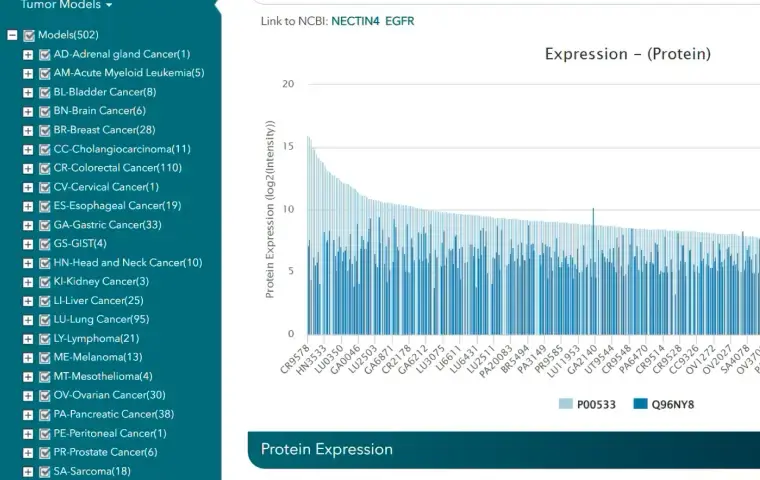
These models include PDX-derived cell lines and dual xenograft systems for simultaneous efficacy and toxicity evaluation.
Study Options
Our design studies range from lead ID to resistance modeling using validated CDX tools and endpoints.
Evaluate single agent and combination drug efficacy in solid and hematologic tumors.

Develop custom drug-resistant CDX models via CRISPR or chronic dosing to evaluate second-line therapies and uncover resistance mechanisms.
In vivo imaging-enabled (BLI and Ultrasound) orthotopic and systemic model studies are available to simulate advanced disease settings and to noninvasively monitor tumor burden, metastasis, and treatment response in real time.

Evaluate anti-tumor activity using PDX, CDX, and organoid models in combination with alpha- and beta-emitting isotopes. Supported by MDC’s radiochemistry expertise, biodistribution analysis, and comparator studies with approved therapies.