Accelerate Breast Cancer Therapeutic Discovery
Crown Bioscience supports preclinical drug development across triple-negative breast cancer, HER2-positive breast cancer, HER2-low breast cancer, ER-positive breast cancer, BRCA-mutated breast cancer, and metastatic breast cancer. Our platforms help researchers evaluate efficacy, explore resistance mechanisms, identify predictive biomarkers, and select the right models for the right patient population.
Why Partner With Crown Bioscience for Breast Cancer Drug Development?
Breast cancer drug development requires models that reflect the biological diversity of the disease. Therapeutic response can vary widely across TNBC, HR-positive breast cancer, HER2-positive tumors, HER2-low tumors, luminal A, luminal B, and BRCA-mutated disease.
Simple cell-based systems may not capture the tumor heterogeneity, target-expression variability, endocrine resistance, immune biology, or metastatic behavior that influence clinical outcomes. Choosing the right preclinical model is essential for building a stronger translational data package.
Crown Bioscience provides an integrated breast cancer platform that supports discovery, lead optimization, translational research, and preclinical efficacy studies.
The Most Comprehensive Breast Cancer Preclinical Platform
Crown Bioscience offers a complete portfolio of breast cancer models and services to help drug developers move from early screening to in vivo validation with confidence.

Crown Bioscience's breast cancer PDX collection includes models representing key clinical and molecular subtypes, including triple-negative, luminal, HER2-positive, ER-positive, and rare histologies.

Crown Bioscience supports breast cancer ADC development with models selected by target expression, subtype, histology, and molecular profile to evaluate efficacy, resistance, and pharmacodynamic biomarkers.

Matched breast cancer PDXO and PDX pairs from the same patient let you screen in vitro and confirm in vivo in genetically concordant models, with organoid studies completing in weeks.

Crown Bioscience's TNBC models support preclinical evaluation of ADCs, targeted therapies, DNA damage response inhibitors, chemotherapy combinations, and immuno-oncology strategies in aggressive breast cancer biology.

Crown Bioscience's breast cancer organoid models enable rapid in vitro screening, combination testing, and biomarker-linked response analysis using patient-derived systems with strong translational relevance.

Crown Bioscience helps researchers select breast cancer models using molecular, pathology, and clinical annotations, including RNA expression, mutation, copy number, IHC, HRD, MSI, and treatment history where available.
Benchmark Your Program Against the Evolving Breast Cancer Treatment Landscape
Breast cancer drug development is increasingly shaped by ADCs, targeted therapies, endocrine therapy combinations, chemotherapy backbones, and biomarker-defined patient populations.
Crown Bioscience supports benchmarking across clinically relevant breast cancer models with data from ADCs and standard-of-care agents, including HER2-directed ADCs, TROP2-directed ADCs, taxanes, endocrine therapies, PARP inhibitors, CDK4/6 inhibitors, HER2-targeted therapies, and immuno-oncology agents.
Utilize our breast cancer PDX, CDX, syngeneic, and organoid platforms to compare response patterns, evaluate combinations, understand resistance, and build a stronger translational data package for internal decision-making and external stakeholders.
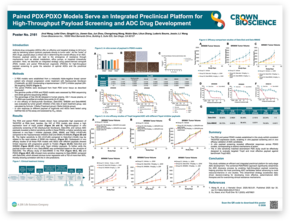
AACR 2026 Poster
Paired Breast Cancer PDX-PDXO Models Serve an Integrated Preclinical Platform for High-Throughput Payload Screening and ADC drugs development
Download NowDrawing on Crown Bioscience’s breast cancer expertise and portfolio of 300+ models, our speakers discuss how to connect early screening with in vivo validation and biomarker-informed therapeutic decision-making.
Mariusz Madej, PhD and David Vallerand, PhD highlight how integrating breast cancer organoids, in vivo models, and biomarker data enables:
- Rapid Translational Screening: Using patient-derived and PDX-derived breast cancer organoids for scalable in vitro screening, responder analysis, and evaluation of ADCs and targeted therapies.
- Predictive In Vivo Validation: Leveraging PDX, CDX, syngeneic, and tumor homograft models to assess therapeutic efficacy across diverse breast cancer settings.
- Biomarker-Informed Model Selection: Combining mutation, expression, and protein data—including ER, PR, HER2, and ADC-relevant targets—to select models and guide targeted therapy, ADC, and immuno-oncology strategies.
Matched patient-derived organoids enable rapid in vitro screening and can be paired with corresponding PDX models for stronger translational continuity.
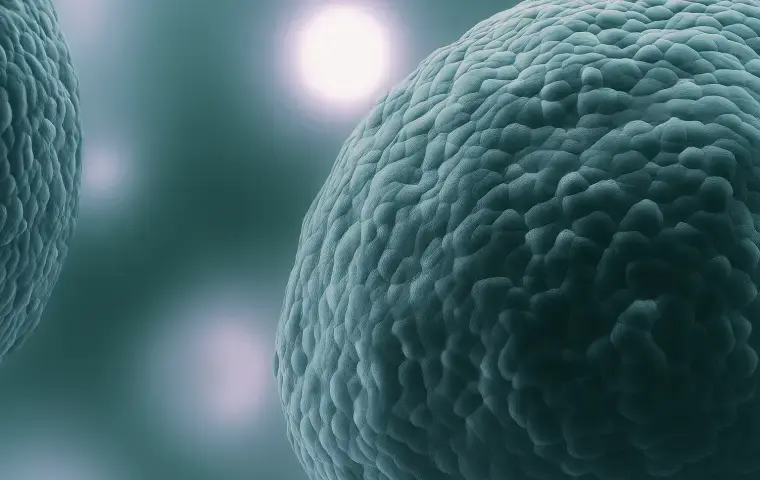
Our Breast Cancer PDX collection supports in vivo efficacy studies, resistance modeling, and biomarker research across clinically relevant molecular subtypes.
GEMMs support mechanistic studies, pathway biology, and resistance research in genetically defined breast cancer settings.
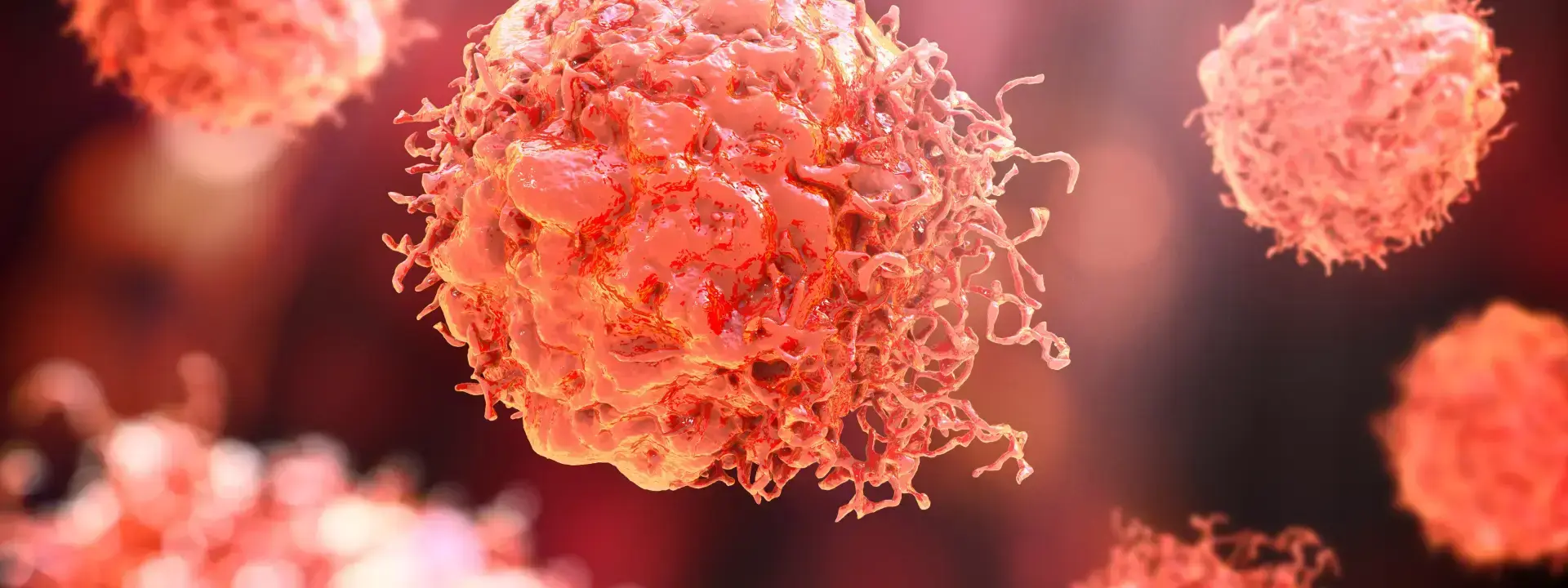
Breast Cancer Services Tailored for Therapeutic Modalities
Crown Bioscience supports breast cancer ADC programs with model selection, target-expression profiling, in vitro screening, in vivo efficacy testing, pharmacodynamic analysis, and resistance studies.
Relevant applications include:
- HER2 ADC studies
- HER2-low breast cancer ADC studies
- TROP2 ADC studies
- ADC payload sensitivity analysis
- ADC combination studies
- ADC resistance modeling
- Target-expression biomarker analysis
Biomarker Guided Insights to Drive Decision- Making
Leverage integrated WES, RNA-seq, 4D-DIA proteomics, IHC, and spatial biology to define PK/PD relationships, identify patient stratification biomarkers, and elucidate response and resistance mechanisms for pancreatic cancer therapies.
Frequently Asked Questions
Crown Bioscience offers breast cancer patient-derived xenografts, patient-derived organoids, matched PDX and organoid systems, cell line-derived xenografts, human breast cancer cell lines, syngeneic models, and mouse-derived translational models.
Yes. Crown Bioscience offers triple-negative breast cancer models across multiple platforms, including PDX, organoid, CDX, and syngeneic systems. These models support efficacy studies, ADC development, biomarker discovery, and combination therapy research.
Yes. Crown Bioscience can support HER2-positive breast cancer programs using models selected by subtype, ERBB2 status, HER2 expression, pathology, and molecular annotation where available.
Yes. Crown Bioscience can help select breast cancer models for HER2-low and ADC-focused programs using target-expression data, molecular profiling, and biomarker-guided study design.
Yes. Crown Bioscience supports ADC development in breast cancer through model selection, in vitro screening, in vivo efficacy testing, target-expression analysis, pharmacodynamic studies, and resistance research.
Yes. Matched breast cancer organoid and PDX models can be used to screen compounds in vitro and validate activity in vivo using related model systems.
Yes. Crown Bioscience supports ER-positive breast cancer studies, including endocrine therapy combinations, CDK4/6 inhibitor combinations, PI3K pathway studies, ESR1 biomarker analysis, and endocrine resistance research.
Yes. Crown Bioscience can support BRCA-mutated and HRD-focused breast cancer programs using molecularly annotated models and biomarker-driven study design.
Yes. Crown Bioscience offers immune-competent breast cancer models, including syngeneic systems, to support immuno-oncology and immune combination studies.
Crown Bioscience supports breast cancer programs involving ADCs, targeted therapies, endocrine therapies, CDK4/6 inhibitors, PARP inhibitors, PI3K inhibitors, AKT inhibitors, chemotherapy combinations, immuno-oncology agents, bispecific antibodies, and targeted protein degraders.
Crown Bioscience helps accelerate breast cancer drug development by combining clinically relevant models, biomarker-guided model selection, in vitro and in vivo workflows, molecular characterization, and expert study design.
Breast Cancer Resources and Data

Advance Your Pancreatic Cancer Program with Confidence
Ready to advance your pancreatic cancer program? Our scientific team is here to help you design the right study — from model selection to biomarker strategy.